Top Belt Conveyor Design Trends for Global Manufacturers?
The belt conveyor design landscape is evolving rapidly. Manufacturers worldwide are adopting new trends to enhance efficiency and productivity. This shift is driven by technological advancements and the need for sustainable solutions.
Innovation in belt conveyor design focuses on modularity and flexibility. These features allow for easy adjustments and scalability in various industries. Additionally, eco-friendly materials are increasingly used, reducing environmental impact. However, not all designs prove effective in real-world applications. Manufacturers must assess the real benefits versus theoretical advantages.
Data-driven design is another emerging trend. Utilizing advanced analytics can improve performance and maintenance. Yet, relying solely on data may overlook important human factors. Engineers and designers need to balance technology with experience. This complex interplay will shape the future of belt conveyor systems.
Emerging Technologies in Belt Conveyor Design for Global Manufacturers
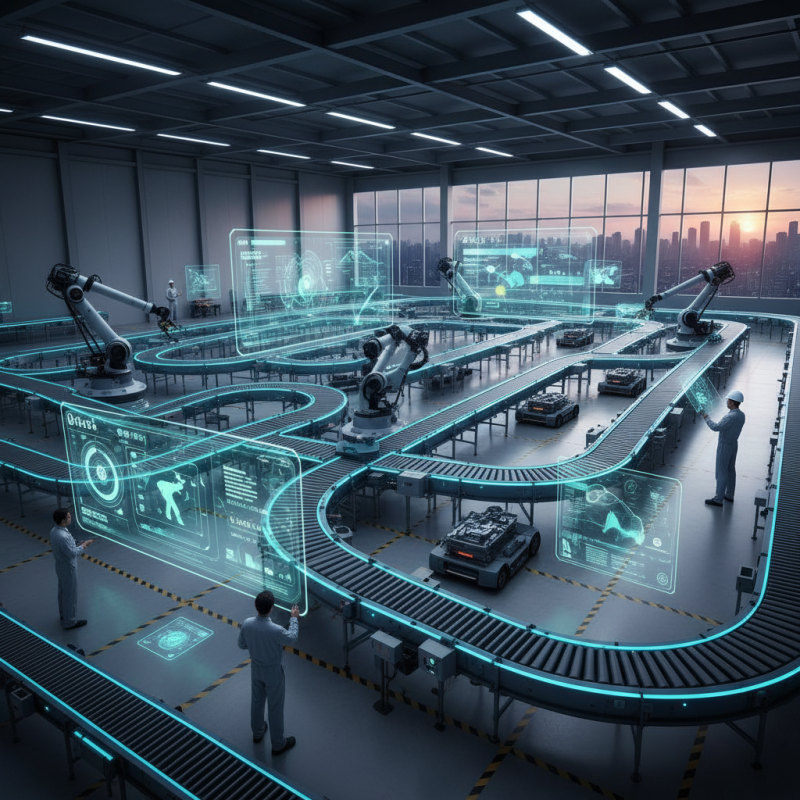
As global manufacturers strive to enhance efficiency, new technologies in belt conveyor design emerge. One significant trend is the integration of IoT. Smart sensors provide real-time data on operations. This helps in predictive maintenance and reduces downtime. Automation is also making its mark, streamlining processes like sorting and loading.
Another notable development is the use of advanced materials. Lightweight and durable materials improve conveyor efficiency. This can lead to energy savings and less structural stress. Additionally, modular designs are gaining traction. These allow quick adjustments to systems based on evolving production needs.
Tips: Regularly assess your conveyor system's design. Be open to changes and improvements. Employ training for staff on new technologies. Adapting to trends ensures competitiveness. Not all innovations will fit every operation. Consider a trial phase before full implementation. Experimentation can yield unexpected benefits and insights.
Top Belt Conveyor Design Trends for Global Manufacturers
Sustainability Trends Impacting Belt Conveyor Systems in Manufacturing
Sustainability is reshaping the manufacturing landscape, especially in belt conveyor systems. Many manufacturers are adopting eco-friendly materials for conveyor belts. This shift not only reduces environmental impact but also meets growing consumer demand for sustainable products. Recycled rubber and biodegradable plastics are becoming common choices.
Energy efficiency is another critical issue. Manufacturing facilities are incorporating energy-efficient motors and systems. These upgrades can significantly lower operational costs. However, the challenge lies in the initial investment. Some manufacturers hesitate, fearing high upfront costs despite long-term savings.
Moreover, maintenance practices are evolving. Companies are exploring predictive maintenance tools driven by AI. These tools aim to decrease downtime and extend belt life. Yet, implementation can be complex and requires skilled personnel. Striking a balance between innovation and practicality poses a challenge that many manufacturers face today.
Top Belt Conveyor Design Trends for Global Manufacturers - Sustainability Trends Impacting Belt Conveyor Systems in Manufacturing
| Trend |
Description |
Impact on Manufacturing |
Sustainability Aspect |
| Modular Design |
Flexible configurations to meet varying needs. |
Increases efficiency and reduces downtime. |
Reduces waste through adaptable systems. |
| Smart Technology Integration |
Incorporation of IoT and sensors for real-time monitoring. |
Enhances operational efficiency and predictive maintenance. |
Lower energy consumption through optimized performance. |
| Sustainable Materials |
Use of recyclable and eco-friendly materials for conveyor belts. |
Promotes a circular economy within manufacturing processes. |
Minimizes environmental footprint of conveyor systems. |
| Energy-Efficient Systems |
Designs that reduce power consumption during operation. |
Decreases overall production costs. |
Supports sustainability goals by reducing emissions. |
| Customization and Personalization |
Tailored systems to suit specific client needs. |
Enhances user experience and operational efficiency. |
Encourages responsible production aligned with client values. |
Integration of IoT in Belt Conveyor Operations and Maintenance
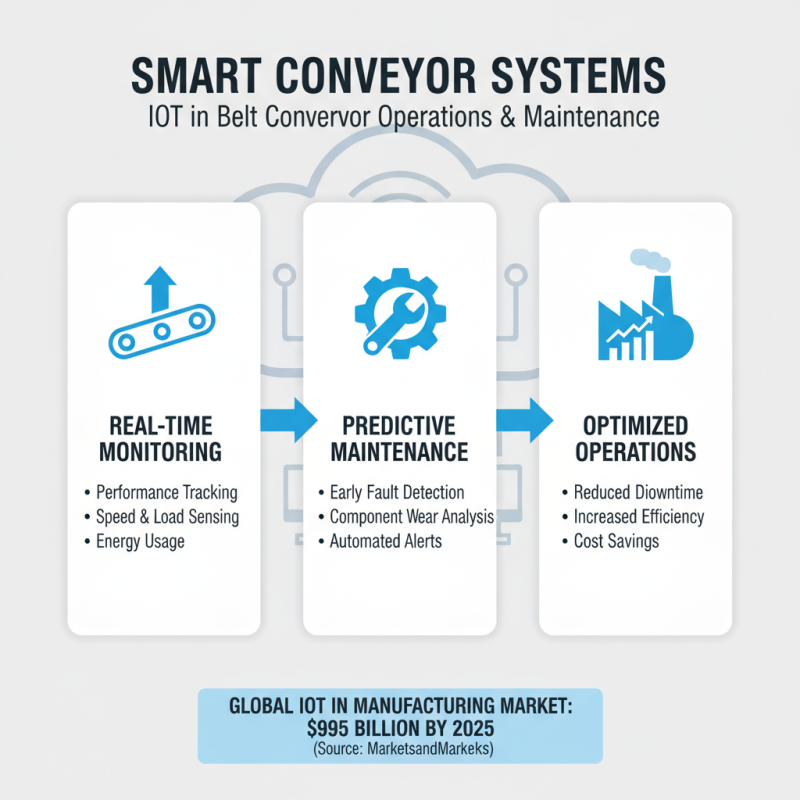
The integration of IoT in belt conveyor operations marks a significant shift in manufacturing strategies. According to a recent report by MarketsandMarkets, the global IoT in the manufacturing market is expected to reach $995 billion by 2025, emphasizing the growing importance of smart technologies. This transformation allows real-time monitoring of conveyor performance, enabling predictive maintenance and reducing downtime.
Operators can collect data on equipment health through sensors attached to the conveyors. This data helps in early detection of wear and tear, which could otherwise lead to unexpected failures. A survey by McKinsey indicates that companies can save up to 30% on maintenance costs by implementing IoT solutions. These insights also aid in optimizing energy consumption by dynamically adjusting conveyor speeds based on production needs.
However, challenges remain. Many manufacturers lack the expertise to implement these technologies effectively. The complexity of integrating IoT with existing systems can be daunting for smaller businesses. Additionally, data security concerns exist, as an increase in connectivity heightens the risk of cyber threats. It is crucial for manufacturers to navigate these hurdles to fully harness the potential of IoT in belt conveyor systems.
Innovations in Material Handling and Efficiency Enhancements
Among the latest trends in belt conveyor design, innovations in material handling are pivotal. The global conveyor systems market is projected to reach $9.2 billion by 2027, reflecting a growing focus on automation and efficiency. Manufacturers now seek solutions that minimize downtime and enhance throughput. The implementation of smart sensors and IoT technology allows for real-time monitoring of conveyor operations. This leads to predictive maintenance, ultimately saving costs and time.
Moreover, the use of lightweight materials is reshaping conveyor design. Materials such as aluminum and composites reduce the overall weight and energy consumption. Research indicates that energy-efficient conveyor systems can decrease power usage by up to 30%. However, transitioning to these materials requires consideration of durability and maintenance. The trade-off between lightweight design and robust performance continues to be debated among industry professionals.
Improved belt designs also enhance efficiency. Modern belts offer better grip and reduced slippage, ensuring safer and smoother operation. Companies are beginning to explore modular conveyor systems, which facilitate quick adjustments and upgrades. Yet, the adoption of these systems presents challenges, including the need for employee training. As the industry evolves, the balance between innovation and practicality remains a significant conversation point.
Safety Standards and Compliance in Modern Belt Conveyor Design
In modern belt conveyor design, safety standards and compliance are crucial. Engineers must adhere to specific regulations to protect workers. These include guidelines for emergency stops, guard placement, and load limits. Compliance ensures that the machinery operates safely in various environments.
Integrating advanced safety features is becoming standard practice. For instance, sensors can detect potential hazards in real-time. These systems enhance workplace safety and can reduce accidents significantly. However, not all conveyor systems prioritize these features. Some manufacturers overlook design elements that could improve safety.
Regular audits and inspections are necessary to maintain compliance. Companies often struggle to meet ever-changing regulations. Training programs for staff are essential but sometimes neglected. The challenge remains: how can manufacturers ensure that safety is not an afterthought? It's a reflection of commitment and responsibility that must be continuously addressed.