How to Choose the Best Industrial Food Grinder Machine?
Choosing the right industrial food grinder machine can seem daunting. Many factors influence your decision, from size and capacity to grinder type and material. Understanding these elements is crucial for effective food processing. A suitable grinder enhances efficiency and reduces operational costs.
Manufacturers often boast superior features, but not all machines deliver as promised. Consider the specific needs of your business. Will you be grinding meat, grains, or something else? This clarity will help narrow your options. It’s essential to research reliable brands and seek equipment that fits your production scale.
Don’t forget about maintenance. Regular upkeep can prolong the lifespan of your industrial food grinder machine. Reflect on your budget too; cheaper models can lead to higher long-term costs. Balancing price with quality ensures a smart purchase decision.
Understanding the Different Types of Industrial Food Grinder Machines
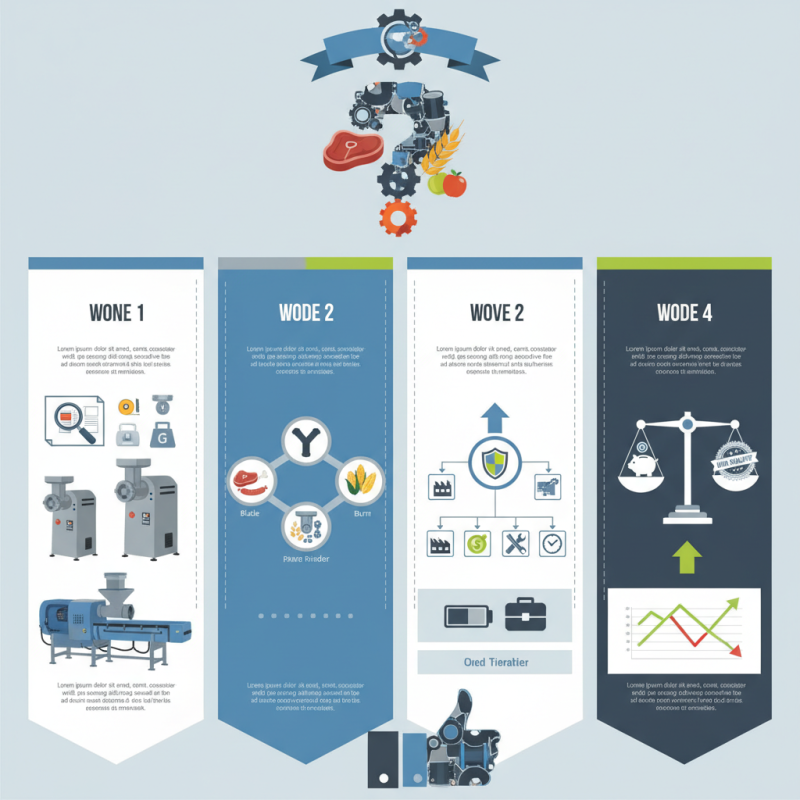
Choosing the right industrial food grinder machine involves understanding its various types. Each type serves specific needs and applications. For instance, a blade grinder is effective for smaller batches and offers quick processing. However, it may not achieve the consistency required for larger-scale operations. Conversely, roller grinders are suitable for high-volume production. These machines excel at creating uniform particle sizes, crucial for product quality.
When evaluating grinder types, consider their power consumption and maintenance requirements. A report by the Food Processing Machinery Association indicates that a well-maintained grinder can improve operational efficiency by up to 20%. However, grinders with complex designs might have higher failure rates, leading to increased downtime. Regular assessments are vital to ensure smooth operations.
The capacity of a grinder also plays a key role. Some machines are designed for food processing facilities producing thousands of pounds daily. Others may be suitable for smaller artisanal producers. Choosing a grinder that aligns with production needs can be challenging. It’s essential to weigh the advantages and drawbacks to find the best fit. Balancing efficiency, durability, and operational costs is crucial.
Comparison of Different Types of Industrial Food Grinder Machines
Key Features to Consider When Choosing a Food Grinder
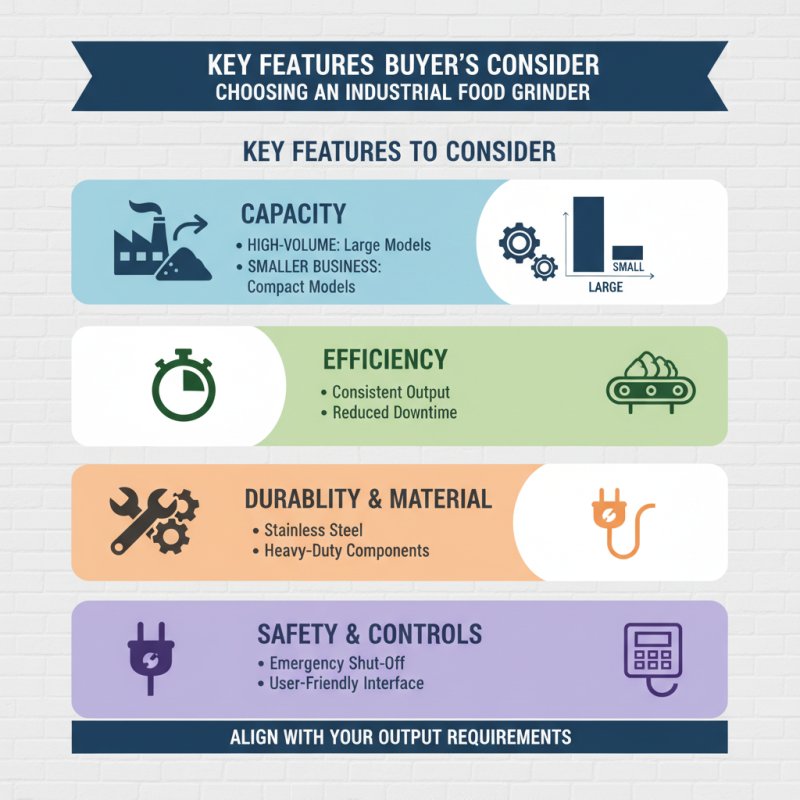
Choosing an industrial food grinder requires careful consideration of several key features. First, evaluate the grinder's capacity. High-volume operations need models that can handle large quantities efficiently. Smaller businesses might prefer more compact models. It's important to select a machine that aligns with your output requirements.
Next, focus on the material quality. Stainless steel is a common choice due to its durability and easy cleaning. However, some budget options may use lower-grade materials that could lead to rust and wear over time. Look for grinders with strong warranties. This can reflect the manufacturer’s confidence in their product.
Lastly, think about ease of use. Is the grinder user-friendly? Controls should be intuitive, and assembly should be straightforward. Some models may require frequent adjustments, leading to downtime. Understand your specific operational needs. An ideal choice balances efficiency, durability, and ease of use. These reflections can help make an informed decision.
Evaluating the Capacity and Speed Requirements for Your Needs
When evaluating the capacity and speed requirements for your food grinder machine, understanding your production needs is crucial. Start by assessing how much food you process daily. This volume determines the necessary capacity of the machine. For instance, a small bakery may require only a couple of hundred pounds per day, while a large processing plant may need to handle several tons. Matching the grinder's capacity to your production goals ensures efficiency and reduces downtime.
Speed is another vital factor. A grinder with adjustable speed settings can accommodate various food types, from soft vegetables to hard grains. Faster speeds may reduce grinding time but can also produce more heat, affecting food quality. It’s important to find a balance. Higher speeds may look appealing, but they can lead to over-processing. This can negatively impact your final product and create waste. Consider the texture you desire for your end product before making a decision.
Reflecting on your specific requirements helps narrow down choices. What works for one business may not suit another. Observe how different machines perform under your typical workload. Consider testing a few models to see which meets all your needs. Understanding the nuances of capacity and speed leads to a more informed purchase, ensuring you select the right industrial food grinder for your situation.
Assessing Material Quality and Build Durability of Machines
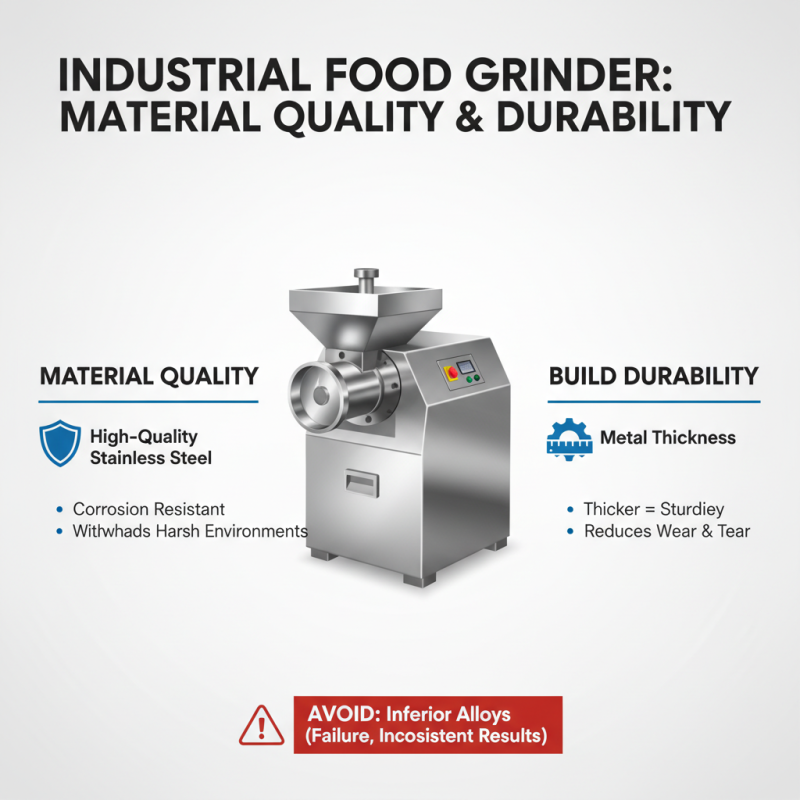
When considering an industrial food grinder machine, the material quality plays a critical role. High-quality stainless steel is often preferred for its resistance to corrosion and ability to withstand harsh environments. Pay attention to the thickness of the metal. Thicker materials provide sturdiness, reducing the likelihood of wear over time. A machine made from inferior alloys may falter under heavy use and produce inconsistent results.
Build durability cannot be overlooked. The assembly and design must facilitate reliable operation. Check for reinforced joints and ensure the parts fit snugly. Machines often come with various component options that might seem appealing, but sometimes simplicity lasts longer. Look for models with easy maintenance access. Furthermore, consider the weight of the grinder; heavier machines can absorb vibrations better, leading to more stable performance.
Even with the best materials, tests are sometimes needed to ensure long-term functionality. Regular inspection can reveal unexpected issues. A thorough understanding of a machine's history can guide future purchases. Relying solely on specifications may lead to oversights in real-world applications. Observing user reviews can also highlight unnoticed aspects about build quality and performance. This approach fosters informed decision-making.
Comparing Brands and Customer Reviews for Informed Decisions
When choosing an industrial food grinder machine, customer reviews can provide valuable insights. According to data from industry reports, 72% of potential buyers consider customer feedback essential. Understanding real user experiences helps assess a machine's performance, durability, and ease of use.
Many reviews highlight longevity as a key factor. A grinder that performs well for years becomes a valuable asset. However, not all models hold up over time. Some users report motor failures within months. This variability can confuse buyers. Comparing a wide range of reviews helps mitigate risk and shape informed decisions.
Brand comparison also plays an essential role. Research indicates that brands with high customer satisfaction ratings often maintain superior quality. Yet, brand loyalty can lead to biased reviews. Some users might ignore flaws due to past positive experiences. Realistically, every machine may have issues. Balancing customer opinions against technical specifications and warranties aids in identifying the right choice.
Comparison of Industrial Food Grinder Machines
| Model |
Power (HP) |
Capacity (lbs/hr) |
Material |
Customer Rating |
Price Range ($) |
| Model A |
5 |
1000 |
Stainless Steel |
4.5/5 |
1500-2000 |
| Model B |
7.5 |
1500 |
Aluminum |
4.2/5 |
1800-2300 |
| Model C |
3 |
800 |
Stainless Steel |
4.8/5 |
1200-1600 |
| Model D |
10 |
2000 |
Cast Iron |
4.0/5 |
2500-3000 |