7 Tips for Choosing Belt Conveyor Systems?

Choosing the right belt conveyor systems is a practical engineering decision, not a simple purchasing exercise. A conveyor that moves cartons efficiently may struggle with abrasive stone, wet food, or uneven loads. Belt width, speed, incline, transfer points, and cleaning access all influence real performance. In a working plant, small design errors become visible quickly: spilled material near a pulley, overheated bearings, or operators reaching around poorly guarded sections.

Industry forecasts show why this decision deserves careful attention. Allied Market Research valued the global conveyor system market at approximately USD 7.6 billion in 2022 and projected continued growth through 2032. Grand View Research also reports steady expansion in the conveyor belt market, supported by e-commerce, mining, manufacturing, and warehouse automation. These reports use different market definitions. The figures are not interchangeable. However, both indicate sustained demand for reliable material-handling equipment.

This guide presents seven practical tips for selecting belt conveyor systems. It considers load characteristics, belt materials, drive configuration, safety, maintenance, energy use, and future capacity. Experienced engineers also examine the entire conveying route, not only the main frame. A low initial price can hide expensive cleaning, downtime, or replacement costs. That assumption can fail. Site conditions matter more than a glossy specification sheet.

Reliable selection requires evidence. Request duty-cycle data, component warranties, maintenance recommendations, and references from comparable facilities. Test the proposed belt with representative products when possible. A conveyor should fit the process, the workforce, and the operating environment. Good decisions begin with measurable requirements, realistic operating conditions, and a willingness to question convenient assumptions.
7 Tips for Choosing Belt Conveyor Systems?

Define the Material and Conveying Requirements

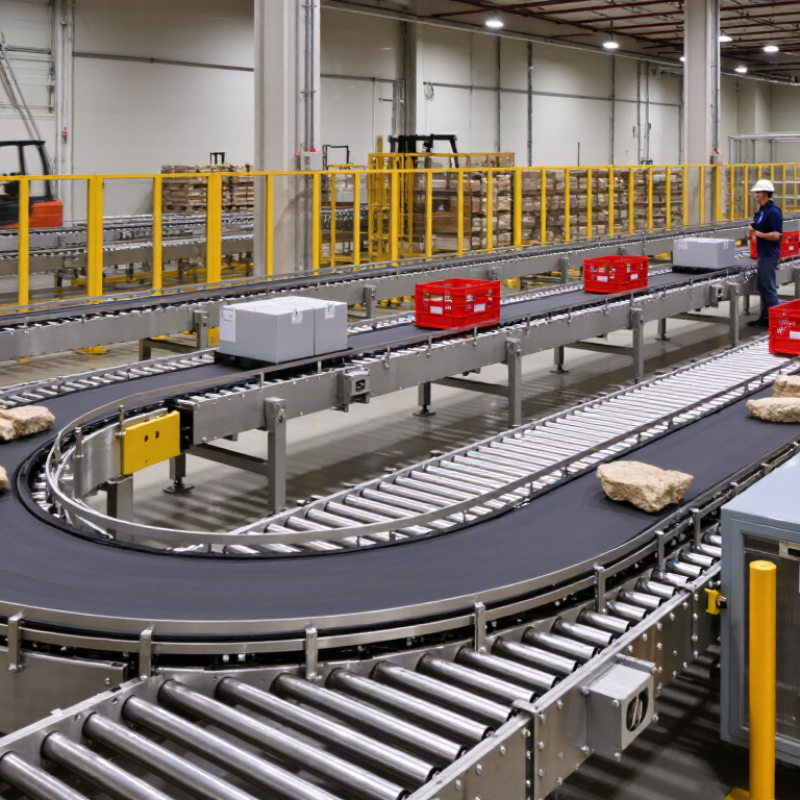
Choosing a belt conveyor system starts with defining the material, not selecting a motor. Record bulk density, moisture, temperature, particle size, abrasiveness, and lump shape. A damp granular material may form clumps, while sharp rock can cut a poorly selected belt. CEMA’s Belt Conveyors for Bulk Materials uses these properties with capacity, belt speed, and surcharge angle calculations. ISO 5048 also evaluates effective tension through friction, lift, and resistance. These are engineering inputs, not paperwork.

Conveying requirements must be equally specific. Measure the required tonnes per hour, route length, elevation change, loading method, discharge points, and operating hours. Include peak demand, not only the daily average. A conveyor carrying 80 tonnes per hour may need higher capacity during short production surges. Leave practical room for spillage control and maintenance access. Small details matter.

Ask operators what really happens.

My field experience suggests that material tests often reveal surprises. A powder may bridge at the hopper, or wet feed may stick beneath the return belt. Designing from laboratory data alone can be risky. Confirm moisture variation and actual lump size during production. CEMA guidance and ISO calculations improve reliability, but they cannot replace site observation. Recheck assumptions before approving the final conveyor specification.

Select the Suitable Conveyor Layout and Belt Type

7 Tips for Choosing Belt Conveyor Systems?

Select the Suitable Conveyor Layout and Belt Type

A suitable conveyor layout begins with the material, not the available floor space. Measure the route, elevation changes, transfer points, and required maintenance access. A straight conveyor usually reduces transfer losses and cleaning time. Inclined layouts save space, but they may require cleated belts or higher friction covers. The wrong incline can cause rollback, spillage, and uneven loading. It looks efficient on paper.

Grand View Research estimated the global conveyor belt market at about USD 5.85 billion in 2023. Its report also projects continued growth through 2030, reflecting wider investment in automated material handling. However, growth does not make every belt suitable. Select abrasion-resistant belts for sharp, heavy materials. Use heat-resistant compounds near hot processes. For wet or sticky products, surface texture and belt tracking deserve closer attention. ISO 5048 recommends calculating belt tensions and power requirements before equipment selection. That calculation should include starting loads, not only normal operation.

MHI’s 2024 Annual Industry Report highlights rising investment in automation and connected equipment. Therefore, leave space for sensors, inspections, and future upgrades. I would also test the actual material whenever possible. Laboratory samples can behave differently from dusty, damp, or irregular loads. A technically correct choice may still disappoint operators. Layout drawings need field feedback.

Evaluate Capacity, Speed, and System Dimensions

7 Tips for Choosing Belt Conveyor Systems

Evaluate Capacity, Speed, and System Dimensions

Capacity should be measured from real operating conditions, not average estimates. Record the product’s weight, density, shape, and hourly volume. Include peak loads during shipment changes or production surges. A conveyor handling 800 cartons per hour may need more capacity than expected if several cartons arrive together. Leave a practical margin, often 15 to 25 percent, for uneven feeding and future demand. Do not size only for today’s output.

Speed affects both productivity and product control. Fast belts can reduce travel time, but they may cause cartons to slide, rotate, or collide at transfers. Fragile packages often need slower movement and softer acceleration. Test the actual product on a short section when possible. I once underestimated how much moisture changed bulk material flow. That small detail disrupted the planned speed.

System dimensions must match the building, equipment, and maintenance routes. Measure conveyor length, belt width, incline angle, discharge height, and clearance around moving parts. Check whether workers can access rollers, motors, and emergency controls without blocking walkways. A narrow footprint saves space, but it may restrict service work later. Use accurate layout drawings and verify floor levels before fabrication. Small measurement errors become expensive corrections. Allow room for product expansion, guarding, cleaning, and safe inspection.

7 Tips for Choosing Belt Conveyor Systems: Evaluate Capacity, Speed, and System Dimensions

This chart presents representative preliminary-design values for troughed belt conveyors handling bulk solids. Wider belts generally support higher capacity, while belt speed affects throughput, dust generation, and material control. Final selection should also consider material density, incline, loading conditions, idler trough angle, and safety requirements.

Compare Drive, Control, and Safety Features

7 Tips for Choosing Belt Conveyor Systems

Compare drive, control, and safety features before comparing prices. A correctly sized drive should match belt length, load weight, incline, and starting frequency. Undersized motors may overheat during repeated starts. Oversized drives can waste energy and increase mechanical stress. Check torque at startup, not only rated speed.

Variable-speed control can reduce product damage and improve workflow. Ask whether the controller supports smooth acceleration and deceleration. It should also communicate with existing sensors and production equipment. Simple controls are often more reliable, but limited feedback can hide belt slip or overloads. I once saw a line delayed because a sensor was installed too far from the transfer point. That detail mattered.

Safety needs practical inspection, not just impressive specifications. Look for accessible emergency stops, guarded pinch points, pull-cord switches, and clear warning labels. Confirm that the system stops predictably after an emergency signal. A reset should require deliberate operator action. Consider noise, dust, cleaning access, and safe maintenance space. These details affect daily reliability. Test the full conveyor under real load before acceptance. No design is perfect. Leave room to revise settings after operators use it for several weeks. Reliable documentation, training, and scheduled inspections are just as important as the drive itself.

7 Tips for Choosing Belt Conveyor Systems? - Compare Drive, Control, and Safety Features

Tip Evaluation Dimension Options to Compare Relevant Technical Facts Selection Guidance and Verification Points
1 Define Capacity and Belt Speed Fixed-speed conveyor
Variable-speed conveyor
Single or multiple loading points
Capacity depends on belt width, belt speed, material density, troughing angle, and loading condition. Increasing speed can increase throughput, but may also increase dust, spillage, and impact at transfer points. Calculate the required mass flow in tonnes per hour or kilograms per hour. Confirm the maximum, normal, and minimum loads, then select a system that can operate efficiently across the expected range.
2 Compare Drive Arrangements Head drive
Tail or center drive
Single-drive or multi-drive configuration
Drive selection is affected by conveyor length, incline, starting torque, belt tension, and required power. Multi-drive systems can distribute belt tension and power on long or heavily loaded conveyors. Request calculations for absorbed power, starting torque, maximum belt tension, and take-up travel. Check whether the drive can start the conveyor under the specified full-load condition without excessive belt stress.
3 Select the Appropriate Motor Control Direct-on-line starter
Soft starter
Variable-frequency drive
A direct-on-line starter applies full line voltage at startup. A soft starter controls voltage during acceleration and deceleration. A variable-frequency drive controls motor frequency and speed, supporting controlled starts and process adjustment. Use controlled starting when the conveyor has high inertia, frequent starts, an inclined belt, or a need to reduce belt shock. Verify motor compatibility, braking requirements, enclosure rating, and harmonic or electromagnetic compatibility requirements.
4 Evaluate Belt Tracking and Tension Control Screw take-up
Gravity take-up
Automatic tracking devices
Correct tension helps prevent belt slip and mistracking. Gravity take-ups can maintain relatively consistent tension as the belt length changes, while screw take-ups are simpler and commonly used on shorter conveyors. Confirm the required take-up travel, available maintenance space, belt elongation allowance, pulley alignment, and tracking arrangement. Include accessible inspection points for idlers, pulleys, and belt cleaners.
5 Specify Control and Monitoring Functions Local control panel
Programmable controller
Supervisory monitoring system
Common monitoring devices include belt-slip switches, belt-misalignment switches, zero-speed sensors, motor overload protection, bearing-temperature sensors, and pull-cord switches. Define automatic start and stop sequences, interlocks with upstream and downstream equipment, alarm priorities, fault reset rules, and data requirements. The control system should prevent material feed when the receiving conveyor is stopped.
6 Prioritize Safety Protection Pull-cord emergency stop
Guarding and access control
Emergency-stop reset and isolation provisions
Nip points at pulleys, drive components, and return rollers can create entanglement hazards. Emergency-stop devices should stop hazardous motion, while guards should prevent access to moving parts during normal operation. Perform a documented risk assessment. Verify emergency-stop coverage, accessible pull-cord spacing, guard strength, lockout/tagout provisions, safe maintenance access, warning labels, and compliance with applicable local machinery and electrical safety requirements.
7 Match Construction to the Material and Environment Standard carbon-steel construction
Corrosion-resistant construction
Dust-tight, washdown, or outdoor configuration
Abrasive materials accelerate wear, while moisture and chemicals can cause corrosion. Temperature, dust, water exposure, food-contact requirements, and hazardous-area classification can affect belt, pulley, motor, bearing, and enclosure selection. Document material size, moisture, temperature, abrasiveness, bulk density, and chemical exposure. Confirm cleanability, corrosion protection, motor enclosure, ingress protection, spare-parts availability, inspection intervals, and total operating cost.

Assess Maintenance Needs, Costs, and Supplier Support

7 Tips for Choosing Belt Conveyor Systems?

Assess Maintenance Needs, Costs, and Supplier Support

A belt conveyor should fit your maintenance routine, not disrupt it. Inspect access points before installation. Can technicians reach rollers, bearings, and tensioning devices safely? Look for simple belt tracking adjustments and clear inspection areas. Keep records. Maintenance logs often reveal repeated failures before they become expensive stoppages. Dust, moisture, heat, and abrasive materials also affect belt life. A design that works well in a clean warehouse may struggle in a quarry.

Purchase price tells only part of the story. Calculate total ownership costs, including electricity, replacement belts, rollers, bearings, labor, and downtime. Ask for realistic service intervals, not optimistic estimates. Request operating data from comparable applications. That gap matters. I once underestimated cleaning time around a transfer point, and the labor cost became larger than expected. Build a contingency allowance for wear parts and production delays. It is not wasteful planning.

Supplier support should be tested before signing. Ask for installation procedures, maintenance schedules, spare-parts lists, and technician training. Confirm response times for breakdowns and whether critical parts are locally available. A reliable supplier should explain limitations clearly, including noise, load changes, and belt-tracking risks. Request references from similar industries, then speak with their maintenance teams. Do not rely only on polished case studies. Support promises sound useful until a conveyor stops during a night shift. Keep every service commitment in writing.