China’s stainless steel conveyor belt manufacturers serve demanding industries, from food processing to heat treatment and pharmaceutical production. Their products move through ovens, washdown zones, freezing tunnels, and abrasive lines. The right belt must resist corrosion, maintain tension, and support stable product handling.
According to materials engineer Dr. Robert W. Messler Jr., “Material performance depends on the environment, the design, and the way the material is used.” This principle matters when comparing Chinese suppliers. A polished stainless steel conveyor belt may look similar across catalogs, yet its wire diameter, weave pattern, edge finish, and weld quality can differ greatly. Small differences become visible beside a hot oven or under repeated cleaning cycles.
Reliable evaluation requires more than factory photographs. Buyers should inspect stainless steel grades, load capacity, belt tracking, surface smoothness, and documented testing. Experience also matters. A manufacturer that understands potato starch, meat residue, or fine metal dust can recommend more practical specifications. Not every low-cost option is a mistake. Not every premium belt is ideal.
That is the uncomfortable part.
This guide examines China’s top stainless steel conveyor belt manufacturers through product capability, customization, quality control, and service response. It also considers delivery consistency and technical communication. These details often decide whether a production line runs smoothly. A belt can be beautifully made and still fail when the wrong mesh is selected. Careful comparison remains essential.
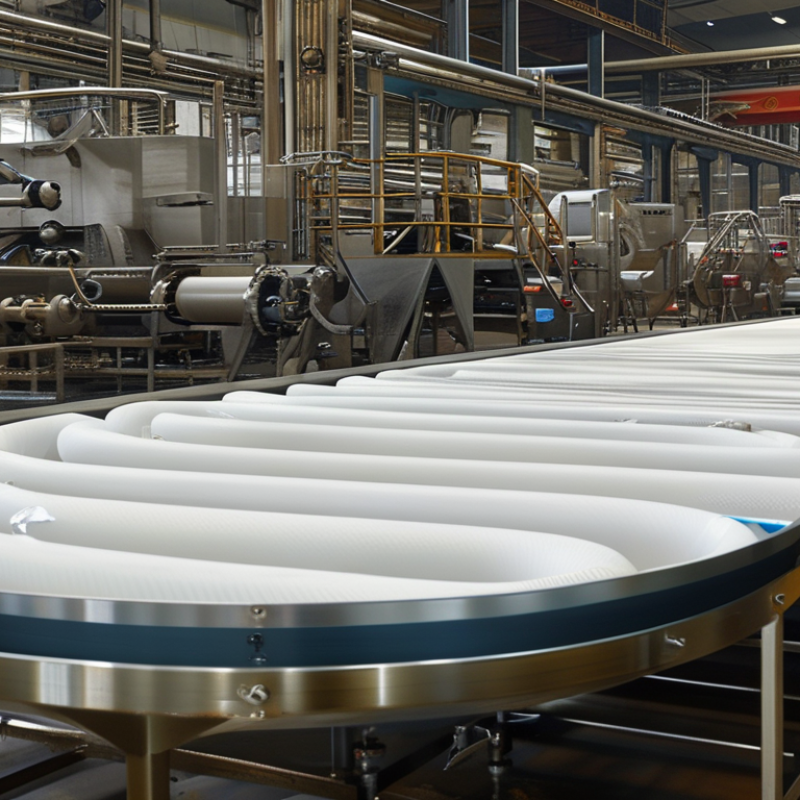
China’s stainless steel conveyor belt manufacturing industry serves food processing, pharmaceuticals, chemicals, electronics, and general automation. Manufacturers commonly work with stainless steel grades selected for corrosion resistance, strength, and cleaning requirements. Material choice depends on temperature, load, moisture, and contact conditions. A belt for a humid washing line needs different protection from one used near dry heat.
Production usually combines wire forming, weaving, welding, edge finishing, and dimensional inspection. Experienced factories check pitch, belt width, tensile strength, and surface quality before shipment. They may also perform trial assembly to identify tracking problems. Small deviations can create large issues on long conveyors. This is where practical engineering experience matters.
Many Chinese manufacturers support custom designs, including balanced weaves, chain-edge belts, rod belts, and special openings. Technical teams often review drawings, operating speed, product size, and cleaning methods with buyers. Reliable suppliers provide material certificates, inspection records, and clear maintenance guidance. However, quality is not automatically consistent across the industry. Some specifications still require closer verification, especially when suppliers outsource welding or surface treatment. Buyers should request samples and confirm production controls before placing large orders. That step feels slower, but it can prevent costly replacement work later.
The industry continues to improve through automation, digital inspection, energy-efficient equipment, and stricter process management. Yet human judgment remains valuable. A photograph cannot reveal every weakness in a weld. Practical testing still matters.
Chinese manufacturers commonly produce several stainless steel conveyor belt types for food, pharmaceutical, chemical, and heat-treatment lines.
Balanced weave belts offer stable movement and good airflow. Compound balanced weave designs reduce product bounce on long conveyors. Chain-driven belts handle heavier loads and wider spans. Rod network belts suit washing, cooling, and drying applications. Flat-flex belts provide open surfaces for drainage and sanitation.
Material selection remains practical, not decorative. The International Stainless Steel Forum reported about 58.4 million tonnes of global stainless steel production in 2023. China contributed roughly 63% of that volume, supporting a broad local supply base.
Many Chinese factories use 304 stainless steel for general processing and 316L where salt, acids, or frequent cleaning create greater corrosion risk. A polished surface helps.
It does not guarantee hygiene.
Engineering details often decide service life. Buyers should inspect weld smoothness, edge finishing, pitch accuracy, and belt tension under load.
Grand View Research’s conveyor belt market analysis identifies food processing as a major application segment, where cleaning access and product handling strongly influence belt selection.
In practice, a small opening can improve drainage but may damage soft products. A tighter mesh protects delicate items but can trap residue.
I would not choose by price alone. Test samples with the actual product, cleaning chemicals, temperature, and conveyor speed.
That step is sometimes skipped. It should not be.
China’s leading stainless steel conveyor belt manufacturers usually begin with controlled wire selection, not weaving.
The International Stainless Steel Forum reported about 58.4 million tonnes of global stainless crude steel production in 2023. China accounted for roughly 36.7 million tonnes. This large upstream base supports consistent access to stainless wire and strip.
Production starts with drawing, where wire passes through dies to reach a precise diameter. Operators then weave the wire into balanced, rod, or spiral mesh structures. Each pattern changes airflow, carrying capacity, and cleaning performance.
Welding joins spiral wires and cross rods at repeated intervals. Edges receive grinding or welded reinforcement. Small errors matter. A loose joint can mark food products or damage a furnace line.
Manufacturers normally inspect wire diameter, mesh pitch, belt width, flatness, tensile strength, and weld quality. Many also use sample load tests and continuous tracking records.
The global conveyor belt market was valued at approximately 5.66 billion US dollars in 2022, according to Grand View Research, with demand linked to food processing, logistics, and industrial automation. That growth encourages faster production, but speed can weaken inspection discipline.
Passivation may improve corrosion resistance, although surface treatment must match the operating chemicals. A bright finish is not always a better belt. Trial running under real temperature, load, and wash conditions remains essential.
China’s stainless steel conveyor belt manufacturers should be judged by evidence, not catalog claims. Production begins with material identity. Ask for heat numbers, mill certificates, and chemical results for every coil or wire batch. Grades such as 304 and 316 must match chloride exposure and washdown conditions. ASTM A240, EN 10088, or an agreed equivalent can define composition and mechanical requirements. However, a standard is only useful when incoming inspection verifies it.
Independent tests should check tensile strength, mesh opening, belt pitch, flatness, weld penetration, and surface roughness. These details matter near transfer points, where one poor weld can mark products or stop a line. ISO 9001 certification supports process control, but it does not guarantee belt performance. The ISO Survey 2022 reported more than 1.2 million ISO 9001 certificates worldwide, showing its wide use, not automatic quality. That distinction is often missed. Request calibration records, weld samples, corrective-action logs, and a traceable final inspection report. Food-contact projects may also require documentation aligned with FDA 21 CFR or Regulation (EC) No 1935/2004.
Specifications should state belt speed, load, temperature, cleaning chemicals, and allowable elongation. Skipping these fields creates a cheap comparison that can become an expensive failure. The World Stainless Association reported 58.4 million tonnes of global stainless production in 2023. That scale supports capacity, but capacity is not consistency. Visit the factory when possible. Look at stored coils, welding discipline, and rejected-piece control. Even strong suppliers can miss a defect, so acceptance testing should remain independent and repeatable.
China Top Stainless Steel Conveyor Belt Manufacturers
How to Select a Reliable Chinese Conveyor Belt Manufacturer
Selecting a Chinese stainless steel conveyor belt manufacturer requires more than comparing prices. Request the steel grade, wire diameter, mesh opening, belt width, and temperature range in writing. A dependable supplier should provide material certificates and a traceable production record for each batch. Ask whether these documents come from the mill or the factory. That small detail matters.
Inspect production evidence, not only showroom photographs. Request close images of welded joints, edge finishing, sprocket engagement, and belt flatness. If possible, order a sample section and test it under your actual load, speed, cleaning method, and operating temperature. Check tensile strength, pitch accuracy, and lateral movement. Poor alignment often appears after several hours, not during a short demonstration. It happens.
Reliability also depends on communication and corrective action. Ask for a drawing approval process, inspection points, replacement terms, and a realistic delivery schedule. A professional team should explain tolerances instead of promising “perfect” performance. Verify export experience through references, factory registration details, and independent inspection when the order is important. Do not rely on certificates alone; check their scope, date, and issuing body. A common sourcing lesson is that unit cost receives too much attention. Installation delays, spare parts, and unsuitable cleaning practices can cost more than the original saving. Leave room for technical revisions before signing.