
Top Clay Graphite Crucible Manufacturers Worldwide?

Choosing the top Clay Graphite Crucible manufacturers worldwide requires more than comparing prices or product photographs. Foundries, jewelry casters, and nonferrous-metal plants need crucibles that survive rapid heating, molten-metal contact, mechanical handling, and repeated thermal shock.

The market matters because industrial output remains substantial. The World Steel Association reported global crude-steel production of about 1.88 billion tonnes in 2023. The International Aluminium Institute recorded roughly 70 million tonnes of primary aluminium production during the same year. These volumes create continuing demand for dependable melting equipment and refractory components. Graphite supply also deserves attention. The U.S. Geological Survey estimated worldwide natural graphite mine production at approximately 1.6 million tonnes in 2023, with China contributing the largest share. Supply concentration can affect costs, lead times, and material consistency.

Dr. S. K. Das, a specialist in refractory materials, emphasized a practical principle: “Thermal shock resistance is not a luxury; it is a production requirement.” That point is easy to test on a factory floor. A crucible may look sound, yet develop hairline cracks after several heating cycles. Small defects can contaminate a melt, interrupt production, or shorten service life. Not every manufacturer publishes comparable testing data. This remains a weakness in many industry rankings.

This guide therefore examines composition, graphite purity, clay bonding, maximum operating temperature, wall design, quality control, customization, certifications, and after-sales support. The leading supplier is not always the largest. Sometimes, the better choice is the manufacturer with clearer test records, steadier batches, and more honest technical guidance.
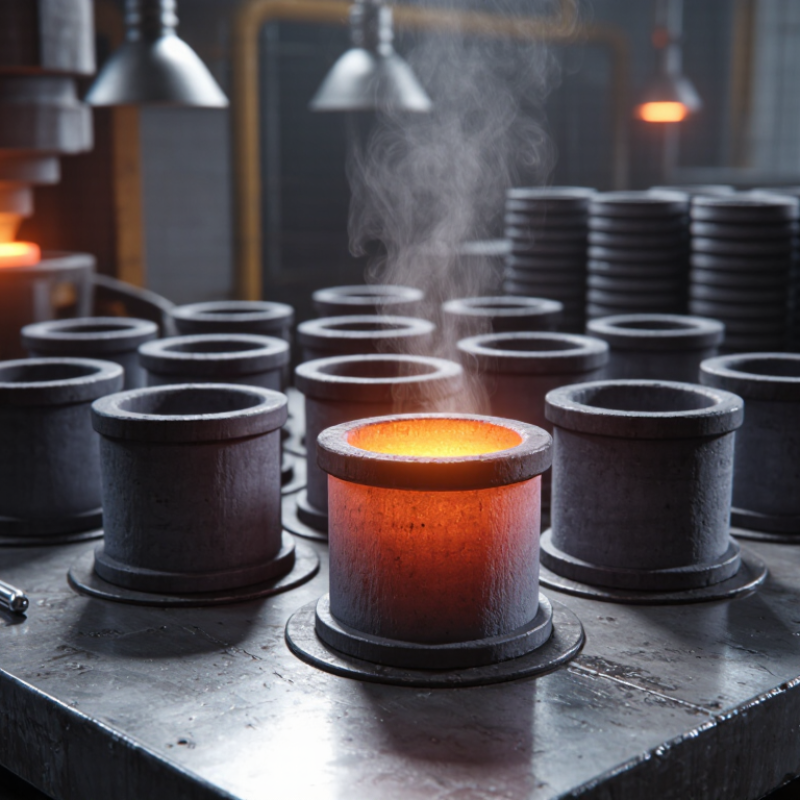
Top Clay Graphite Crucible Manufacturers Worldwide?

Clay Graphite Crucibles: Definition, Composition, and Main Applications

Clay graphite crucibles are refractory vessels designed to melt and hold metals at high temperatures. They combine natural graphite with fire clay, creating a structure that balances thermal conductivity and heat resistance. Graphite spreads heat quickly and limits sticking, while clay provides shape and mechanical strength. Many formulations also include silicon carbide, alumina, silica, or carbon-based binders. Exact ratios vary by temperature, furnace type, and casting practice.

Foundries commonly use them for aluminum, copper, brass, bronze, and selected precious-metal alloys. They suit batch melting because operators can charge metal, heat it evenly, and pour through a shaped lip. A dense inner surface helps reduce metal penetration and simplifies cleaning between melts.

Performance depends on preheating, dry storage, controlled loading, and avoiding sudden temperature changes. Small handling mistakes matter. An overfilled crucible can spill, while a cold crucible may crack during rapid heating.

For buyers comparing manufacturers worldwide, useful evidence includes composition data, dimensional tolerances, test methods, and service-temperature guidance. Experienced suppliers should explain whether a grade targets induction, fuel-fired, or resistance furnaces. They should also disclose oxidation limits and recommended furnace atmospheres. In real workshops, service life is rarely determined by chemistry alone. Operator technique, alloy contamination, flux use, and repeated thermal shock can change results. A crucible that looks ideal on paper may still disappoint in daily casting.

Key Performance Factors for Comparing Global Manufacturers

Comparing global clay graphite crucible manufacturers requires more than checking maximum temperature claims. A foundry should examine graphite purity, clay bonding, bulk density, wall thickness, and thermal-shock resistance. These factors affect melting stability, service life, and metal contamination.

The USGS Mineral Commodity Summaries 2024 estimated global natural graphite mine production at about 1.6 million metric tons in 2023. This scale does not guarantee consistent crucible quality. Raw material origin, purification, and particle grading still require verification. Ask manufacturers for batch certificates, dimensional tolerances, apparent porosity, and oxidation testing. A crucible that survives repeated heating is usually more valuable than one with a higher advertised temperature.

Thermal cycling deserves close attention. ASTM C1171 testing principles can help assess resistance to repeated heating and cooling, although crucible buyers should confirm the method suits their furnace conditions. The IEA’s Global Critical Minerals Outlook 2024 also highlights graphite supply-chain concentration and processing risks. That makes traceability, secondary sourcing, and delivery reliability practical performance factors. Look for documented quality systems, sample inspection records, and clear replacement policies.

Small details matter. A smooth pouring lip reduces metal loss. Uniform walls improve heat distribution. Still, no scorecard is perfect. I would test several production batches before signing a long contract. Suppliers may publish impressive laboratory results, yet actual performance can change with furnace atmosphere, operator habits, and alloy choice.

Leading Clay Graphite Crucible Manufacturers by Region

Clay graphite crucible manufacturers differ by region, materials, and production experience. East Asian producers often focus on high-volume manufacturing and consistent dimensional control. Their crucibles commonly support aluminum, copper, brass, and precious-metal melting applications. Automated forming can improve wall uniformity, although final inspection still matters.

European manufacturers generally emphasize process traceability, thermal stability, and documented quality testing. Many study graphite purity, clay bonding, oxidation resistance, and thermal shock performance. These details matter when a crucible moves repeatedly between a hot furnace and cooler handling areas. Some producers also provide custom pouring lips, reinforced rims, and furnace-specific sizing. Small details matter.

Manufacturers in North America often compete through engineering support, application testing, and flexible batch production. They may help users select crucibles according to furnace temperature, alloy type, heating cycle, and expected service life.

South Asian producers are increasingly recognized for practical designs, competitive production, and export-oriented quality systems. However, regional reputation alone is not enough. Buyers should review test records, raw-material controls, packaging methods, and replacement consistency.

In real workshops, failure may come from moisture, incorrect preheating, or uneven loading rather than poor manufacturing. I have found that published specifications can be useful, but they rarely explain every operating condition. That gap deserves careful discussion between the manufacturer and the end user.

Manufacturing Methods, Quality Standards, and Product Customization

Top Clay Graphite Crucible Manufacturers Worldwide?

Manufacturing quality begins with controlled raw materials, not attractive catalogs. Producers blend flake or amorphous graphite with refractory clay, additives, and binders. The mixture is pressed or slip-cast, dried slowly, and fired under controlled temperatures. Poor drying can create hidden cracks. They often appear only after repeated thermal cycling.

The USGS Mineral Commodity Summaries 2024 estimated global natural graphite mine production at about 1.6 million metric tons in 2023. This expanding material supply does not guarantee consistent crucible performance. Serious manufacturers test graphite purity, particle size, bulk density, apparent porosity, and thermal-shock resistance. ISO 9001 systems support process control, but certification alone proves little about crucible behavior. Buyers should request batch records, inspection reports, and traceable certificates.

Customization should match the furnace, alloy, and handling method. Options include wall thickness, capacity, pouring spouts, lids, reinforced rims, and machining tolerances. Copper melting may require different oxidation resistance than aluminum or precious-metal processing. A useful supplier also discusses heating rates and atmosphere control, rather than promising universal durability. This is where many specifications remain incomplete. Field feedback matters more than laboratory claims. A practical trial batch can reveal warping, slag adhesion, or unexpected permeability before full production. Temperature ratings still deserve skepticism. In real furnaces, loading mistakes and uneven heating shorten service life.

How to Select a Suitable Clay Graphite Crucible Supplier

Selecting a suitable clay graphite crucible supplier requires more than comparing prices or catalog photographs. In foundry practice, crucible life depends on graphite purity, clay bonding, wall density, firing quality, and furnace compatibility. Ask for test data covering thermal shock, maximum operating temperature, oxidation resistance, and chemical attack. The USGS Mineral Commodity Summaries 2024 reported approximately 1.6 million metric tons of natural graphite production in 2023. This supply scale matters, but raw material availability does not prove crucible consistency.

Request batch traceability and independent inspection records. A reliable supplier should explain forming methods, kiln temperatures, dimensional tolerances, and reject rates. Check whether the crucible suits induction, gas, or electric furnaces. Also compare capacity under real metal loads, not only nominal volume. ASTM C560 testing references can help assess carbon and graphite products, although they cannot replace application trials. A good supplier welcomes sample testing. That matters.

Tips: Test two or three sample batches before signing a long-term contract. Record melt cycles, cracking, slag adhesion, and metal contamination. Ask for packaging details, because small edge damage can become a serious failure during heating. I would not trust a polished certificate alone. Supplier audits, production photographs, and customer references reveal more. The best choice may cost more initially, yet unstable quality can create larger losses through downtime, rejected castings, and unsafe breakage.

Top Clay Graphite Crucible Manufacturers Worldwide? - How to Select a Suitable Clay Graphite Crucible Supplier

A practical, brand-neutral comparison framework for evaluating clay graphite crucible manufacturers and suppliers worldwide.

Evaluation Dimension Relevant Technical Benchmark Why It Matters Evidence to Request from the Supplier
Application Compatibility Select a crucible specifically rated for non-ferrous melting, precious-metal melting, laboratory use, or other intended applications. Different metals, furnace designs, fluxes, and heating cycles can require different crucible grades. Application data sheet, recommended metals, compatible flux list, and operating instructions.
Maximum Service Temperature Clay graphite crucibles are commonly offered for high-temperature use, with actual limits often falling within approximately 1,200–1,600 °C depending on grade, atmosphere, and furnace conditions. The published maximum temperature is not a universal operating temperature; exceeding the grade limit can cause oxidation, deformation, or cracking. Technical datasheet stating maximum service temperature, test conditions, heating rate, and atmosphere limitations.
Graphite and Clay Formulation The crucible should use a controlled graphite-clay refractory formulation with consistent raw-material quality and particle distribution. Formulation affects thermal conductivity, chemical resistance, thermal-shock performance, and service life. Material specification, allowable composition range, raw-material inspection procedure, and batch traceability record.
Thermal Shock Resistance Prefer products tested under repeated heating and cooling cycles appropriate to the customer’s furnace process. Rapid temperature changes are a common cause of cracking, especially during preheating, charging, and pouring. Thermal-cycle test method, number of cycles, failure criteria, and representative test results.
Oxidation Protection For air-fired or intermittently exposed furnaces, use a crucible with an appropriate oxidation-resistant treatment or protective glaze where specified. Graphite oxidizes in air at elevated temperatures, reducing wall thickness and shortening crucible life. Coating specification, oxidation test data, recommended furnace atmosphere, and storage requirements.
Chemical Resistance The grade should be compatible with the intended molten metal and flux system; aggressive oxidizing fluxes require special review. Chemical attack can cause erosion, contamination, wetting problems, and premature wall failure. Compatibility chart, flux recommendations, contamination limits, and application references for similar melts.
Dimensional Accuracy Confirm diameter, height, wall thickness, base geometry, pouring lip, and dimensional tolerances before ordering. Accurate dimensions are essential for furnace fit, lifting equipment, heating efficiency, and safe pouring. Controlled engineering drawing, inspection report, tolerance table, and sample approval procedure.
Capacity and Size Range Available capacities should cover the required metal charge while maintaining safe freeboard and avoiding overfilling. Nominal capacity and usable capacity are different; molten metal expansion and pouring clearance must be considered. Capacity chart in litres or kilograms, material-density assumptions, and recommended maximum fill level.
Quality-Control System Look for documented controls covering raw materials, forming, drying, firing, finishing, inspection, and final packing. Process control reduces variation in porosity, strength, dimensions, and service life between production batches. Inspection plan, batch numbering, nonconformance procedure, calibration records, and quality certificates.
Certifications and Testing An ISO 9001-based quality system can support process consistency, but certification does not replace product-specific testing. A suitable supplier should demonstrate both management-system control and technical performance for the required grade. Valid certification scope, laboratory test reports, product conformity documents, and audit availability.
Sample and Pilot Evaluation Request production-equivalent samples and evaluate them through the actual preheating, melting, holding, and pouring cycle. A sample test reveals practical performance more reliably than catalogue specifications alone. Sample protocol, test duration, number of melts, post-use inspection criteria, and replacement policy.
Packaging and International Logistics Packaging should protect brittle refractory products from impact, moisture, vibration, and stacking damage during international transport. Transit damage can create invisible cracks that lead to failure during the first heating cycle. Packaging specification, pallet details, export experience, shipping terms, insurance, and damage-claim process.
Technical Support and Total Cost Compare purchase price together with expected service life, failure rate, delivery time, technical support, and replacement availability. The lowest unit price may produce a higher cost per melt if the crucible has shorter life or causes production downtime. Lifecycle-cost estimate, operating guidance, troubleshooting support, lead time, warranty terms, and spare-stock recommendations.
Selection note: Temperature ranges and performance values are typical industry guidelines rather than universal specifications. Always confirm the exact grade, furnace atmosphere, molten material, flux, heating cycle, and safety instructions with the selected supplier before purchase.